
Starke County Probate Records Overview
Probate records in Starke County are handled through Starke Circuit Court, described here as the Probate Division of the Circuit Court because the local court has jurisdiction over estates, trusts, and guardianships. The Starke Circuit Court Court Services page lists estates, trusts, and guardianships among the case types heard by the court. The Clerk handles filing and records management for those court matters.
Probate records may include a petition to open an estate, a will admitted to probate, letters testamentary or letters of administration, notices, inventories, creditor claims, accountings, sale petitions, guardianship reports, orders, and final closing papers. A will is not always a public court record while the person is living. It becomes part of the probate court file when filed and admitted in a court case.
Probate Division of the Circuit Court
Starke Circuit Court
53 East Washington Street
Knox, IN 46534
(574) 772-9146
Starke County Clerk
PO Box 395
53 East Washington
Knox, IN 46534
(574) 772-9128
Monday-Friday, 8:00 a.m.-4:00 p.m. CST
Starke County Probate Terms
Probate files use terms that do not always appear in ordinary civil or criminal court records. These definitions help when reading a Starke County estate or guardianship docket in MyCase or when asking the clerk for a copy.
- Testator
- The person who made a will.
- Executor
- The person named in a will to carry out estate duties, often called a personal representative in court practice.
- Intestate
- Dying without a valid will, which means estate distribution follows Indiana law.
- Guardianship
- A court case appointing a person to act for a minor or protected adult.
- Conservatorship
- A protective property-management concept; Indiana users should confirm the exact local case type with the clerk because guardianship is the term documented in the Starke research.
Search Starke County Probate Records
Public Starke County probate case information can be searched through MyCase Indiana Courts Case Search. Estate, trust, and guardianship records may appear there when they are public and entered in the statewide case system. Indiana's public-records gateway also points users to a guardianship-case search path where available, but certified records and nonlinked documents still come from the county clerk.
Use a full name, case number, and county filter when possible. For an estate, search the decedent name, estate name, petitioner, or personal representative if public. For guardianships, some protected-person details may be limited. A missing online document link does not prove the record is closed. It may only mean the public document is not available online.
| Field Label | Type | Required | Options / Notes |
|---|---|---|---|
| Case number | Text | Optional/conditional | Best field for a known estate or guardianship case. |
| Party/name | Text | Optional | Search decedent, estate, petitioner, guardian, or protected person where public. |
| County | Dropdown | Optional | Select Starke to narrow statewide results. |
| Case type | Dropdown/filter | Optional | Estate, guardianship, trust, or probate-related categories if exposed. |
| Filed date range | Date | Optional | Useful for older estate results. |
| Search | Button | Yes | Runs the MyCase search. |
Indiana Probate Code Records
The Indiana probate code is the state-law source for many estate, probate, and small-estate rules used in Starke County. It matters for record access because a small estate may use an affidavit path rather than a full administration when statutory conditions are met. The research notes Indiana Code Title 29 and the small-estate affidavit statute, but it does not provide a Starke-local form packet or fee schedule.
The Indiana probate code title is the source shown for the Starke County probate records research.
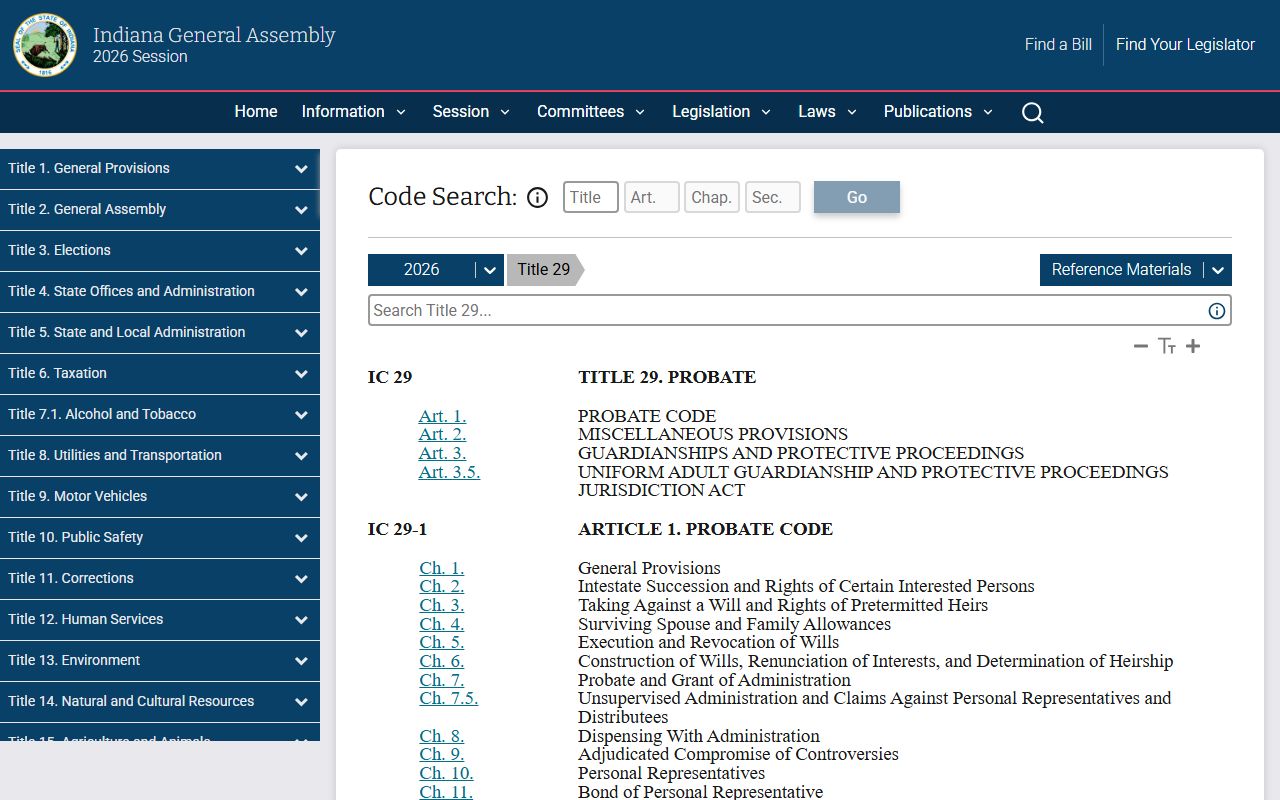
That state code source supports estate and small-estate context, while Starke County filings still go through the local court and clerk.
Starke County Probate Case Types
Starke County probate records are not limited to large estates. The court's jurisdiction list supports several related case groups, and each group can produce different public and restricted documents. Estate records can show petitions, wills, letters, inventories, claims, accountings, and closing orders. Trust cases usually appear when a dispute or court-supervised issue is filed. Guardianships can involve adult or minor protected persons and may include reports, orders, and financial accountings.
| Case Type | Common Record Items | Access Caution |
|---|---|---|
| Estate | Petition, will, letters, notices, inventory, claims, final order | Death certificate or account details may be restricted. |
| Will | Will admitted to probate and related orders | Living-person will safekeeping was not located in Starke sources. |
| Trust | Trust dispute filings, petitions, orders | Private trust details may not appear unless filed in court. |
| Guardianship | Appointment, reports, accountings, orders | Minor, medical, and protected-person data may be confidential. |
| Small estate | Affidavit path when Indiana rules allow | Confirm threshold, timing, and form needs before filing. |
Starke County Probate Filing Fees
The official Starke County sources reviewed did not publish a complete probate fee table. That gap should be treated as a records-request issue, not as a reason to guess. Before filing or requesting certified letters, ask the Starke County Clerk for the current filing fee, copy charge, certification cost, and accepted payment methods.
| Item | Amount |
|---|---|
| New estate filing | Fee not located in official Starke sources |
| Guardianship filing | Fee not located in official Starke sources |
| Certified copy / letters | Fee not located in official Starke sources |
| Plain copies | Fee not located in official Starke sources |
Note: The clerk can also confirm whether a request should be made in person, by mail, or through a certified-records option linked from the clerk page.
How Starke County Probate Works
Probate begins with the question of whether court action is required. Some assets may pass by beneficiary designation, joint ownership, trust terms, or a small-estate affidavit. If court action is needed, the filing goes through the Starke County Clerk for Starke Circuit Court.
- Determine whether probate is needed or whether a small-estate affidavit, trust transfer, or beneficiary transfer applies.
- File the petition and estate documents with the Starke County Clerk for Starke Circuit Court.
- The court reviews appointment of a personal representative or guardian and issues orders or letters if granted.
- Provide required notice to heirs, creditors, and interested persons.
- File inventory, accounting, guardianship reports, or other required papers.
- Resolve claims, distribute or sell assets if allowed, and seek a closing or final order.
Restricted Starke County Probate Records
Probate files often mix public court actions with sensitive personal information. Guardianship cases can include protected-person data, minor information, medical details, and financial accountings. Estate files may include account numbers, restricted death-related documents, or sealed filings. Indiana Access to Court Records rules and probate statutes determine what the public can see.
If MyCase does not show a document, contact the clerk rather than assuming the case does not exist. The clerk can explain whether the document is not online, is available only at the counter, requires redaction, or is confidential. For broader case context, Starke County probate records can also connect to marriage and divorce records when family status affects heirs, spouse rights, or name history.